Health and fitness apps ask for something many other apps don’t: consistency. Their value builds over time, through routines repeated and goals gradually reached. That makes the relationship with the user unusually dependent on trust. The app has to feel like an environment that supports the behavior it is trying to encourage, not one that works against it.
Programmatic advertising complicates that relationship. Publishers can carefully shape the product around that experience while still having limited visibility into the creatives arriving through their advertising supply chain. An impression that is offensive, deceptive, disruptive, or designed to look like part of the product can undermine an experience the publisher has spent much longer building. Even a perfectly legitimate ad can create that contradiction: a fast food promotion appearing while someone logs a meal is unremarkable inventory almost anywhere else, yet can work directly against the behavior the app is trying to support.
For health and fitness publishers, that makes ad quality more than a question of whether an ad is safe enough to serve. It is also a question of whether it belongs in the experience at all, and whether the controls intended to keep unwanted ads out actually work before a user sees them.
When inappropriate ads cross the line
Some advertising is fundamentally at odds with the environment health and fitness publishers want to create. Sexual and adult content is the clearest example, but unwanted creative does not always arrive from an obviously adult advertiser. Dating and live-chat apps can cross the same boundary through sexually suggestive campaigns, with suggestive AI-generated characters adding another form of adult-adjacent creative publishers may encounter. Gambling creates a similar conflict for publishers that exclude casino advertising from their inventory. These boundaries can carry particular weight in health and fitness products built around routines: explicit creative inside a meditation or sleep app, or gambling promotions inside a cycle-tracking or fertility app, collide with the expectations those products work to establish with their users.
Other boundaries are shaped by policy rather than a fixed decision. Alcohol, pharmaceutical and supplement advertising, political campaigns, and other sensitive categories may be acceptable in some circumstances and inappropriate in others depending on audience, market, or publisher policy. For publishers, that means the line between acceptable and inappropriate content can shift with the circumstances. And sometimes the harder ad-quality problem begins where those explicit boundaries end: the ad itself may be perfectly legitimate, yet still be completely wrong for the experience around it.
-

A suggestive video chat ad illustrates how sexualized creative can cross publisher content boundaries without containing explicit adult content.
Legitimate ads, unacceptable context
Health and fitness sessions have a particular rhythm. They depend on focus, momentum, calm, or simply staying engaged with a routine without being pulled away from it. Advertising can break that rhythm without crossing any obvious content boundary. A weight-loss supplement may sit squarely within the app’s subject matter while conflicting with the approach to health and well-being the publisher wants to support. A dermatology ad featuring an extreme close-up of toenail fungus or a personal care ad centered on excessive earwax may promote a perfectly legitimate product and still feel completely out of place alongside content focused on nutrition. In fact, matching health advertising with health content can look perfectly logical at the category level. The categories match. The moment does not.
The same disruption can happen without a disturbing image. Autoplay audio cutting across the music or podcast accompanying a workout immediately competes with the experience already in progress. Combat-heavy or mature game creative can create a similar clash in tone, despite being unremarkable inventory elsewhere. None of these ads needs to be fraudulent, malicious, or inherently inappropriate. What makes the impression unacceptable is the experience it interrupts.
-
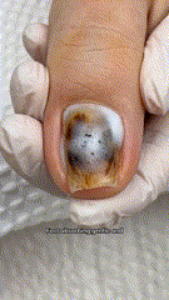
A health-related ad can be entirely legitimate and still introduce imagery that clashes with the experience around it.
Ads that exploit user trust
The stakes change when an ad is not simply disruptive, but actively deceptive or malicious. A fake security warning claiming the device has been hacked, or a phishing attempt disguised as a system alert, arrives through an app the user already knows and trusts. The message may have nothing to do with health or fitness, but the context around it can still lend credibility to an interaction that deserves none. The trust built between publisher and user becomes something the malicious advertiser can exploit.
Financial scams turn that borrowed trust into a more tangible loss. Gift card, survey, and prize offers can lead from an enticing promotion to pages collecting personal or payment information, while subscription traps can leave users with charges they never knowingly agreed to. For users already accustomed to subscriptions or premium features within the app, being asked for payment information may not immediately feel out of place, which gives a deceptive journey room to look credible. In reported cases, users have provided payment details believing they were responding to a legitimate offer, with unauthorized charges leading to support escalations and chargeback requests. At that point, the problem is no longer what the ad looked like or whether it disrupted the session. The user has suffered real harm from an interaction that began inside the app.
The transaction may ultimately happen elsewhere, but that distinction means little to the person affected. They encountered the ad through a product they chose to trust, not through the SSP, network, or advertiser responsible for serving it. For health and fitness publishers, protecting the ad experience therefore extends beyond preserving the tone of the product. It means protecting the people using it.
-

Prize and gift card ads can use familiar brands and high-value rewards to draw users into deceptive journeys that collect personal or payment information.
Ads that impersonate the app itself
Some deceptive ads go beyond appearing inside a trusted app and try to look like they belong to it. A fake notification badge, a message prompt styled to resemble native UI, or a transparent creative blending into the surrounding interface can all exploit the same assumption: that something appearing inside the app is part of the app. Copy asking users to activate an account, respond to an alert, or continue a process deepens the illusion by making a third-party action look like something the product itself is requesting. The user is not being asked to trust an ad; they are being led to believe there is no ad there at all.
Competitor advertising sits at the milder end of the same problem. There is nothing inherently deceptive about promoting a competing health or fitness product, but that changes when its creative borrows the host app’s visual language or leads into a sign-up flow that could be mistaken for the publisher’s own premium offering. The publisher’s interface conventions and the familiarity it has built with users are then doing part of the competitor’s work, making its acquisition journey feel like a continuation of the product the user is already using. At that point, UI impersonation becomes a commercial threat as well as a deceptive one.
-

Deceptive ads can imitate familiar system prompts, making a third-party action appear to come from the app or device itself.
From reacting to bad ads to stopping them before the impression
By the time a user reports an inappropriate ad, closes a fake system warning, or contacts support about an unexpected charge, the publisher is already working backward. The creative has been served, the experience has been disrupted, and the team is left tracing the advertiser and demand source behind it, then adding another rule or block to prevent the same incident from happening again. But the next violation can arrive under a different advertiser, domain, category, or creative, leaving the publisher reacting to what users have already seen.
That is the gap category rules and advertiser blocklists cannot close on their own. An AI companion app can sit outside an adult classification while serving sexualized creative. A legitimate health advertiser can use imagery that is unacceptable in context regardless of category. A phishing or scareware campaign can use deceptive creative or landing-page behavior that an advertiser classification alone cannot reveal, before leading the user somewhere malicious. And an ad that imitates native UI cannot be understood from an advertiser name alone. What matters is not only how the advertiser is classified, but what the creative actually shows, how it behaves, where it leads, and whether it meets the publisher’s standards before the user ever sees it.
This is where creative-level enforcement becomes necessary. AppHarbr gives publishers that creative-level control across their programmatic inventory, identifying and blocking ads that violate their quality, security, and suitability standards before the impression is served, without simply leaving that inventory unfilled. For health and fitness publishers, that means protecting the experience users showed up for without treating ad quality and monetization as a tradeoff. Learn more about how AppHarbr helps publishers control what their users actually see.